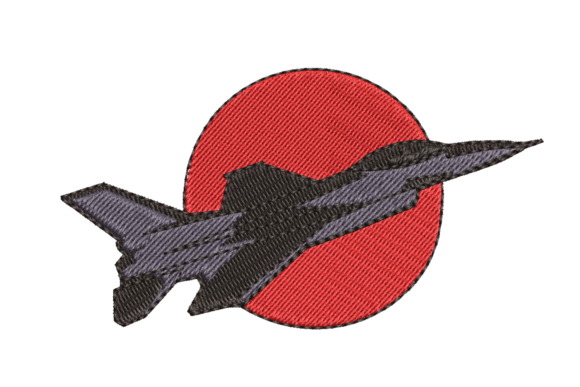
Fighter Jet – Embroidery Design
A Bold, Clean Statement for Boutique Apparel
As an embroidery designer who’s developed collections for small clothing brands and Etsy sellers over the past decade, my first impression of Fighter Jet – Embroidery Design is immediate: it reads as confident, crisp, and intentionally uncluttered. This isn’t a cartoonish or overly stylized jet—it lands with a grounded sense of realism and precision. The visual personality leans bold and modern, not playful or cutesy, making it ideal for apparel that balances authenticity with attitude. It feels premium in execution—not fussy, but intentional—like a design meant to hold its own on structured fabric without competing with busy patterns or loud colors.
How It Performs Across Real Apparel Projects
I tested Fighter Jet – Embroidery Design across several garment types we regularly use for boutique sweatshirt drops: neutral heather grey sweatshirts, soft pastel hoodies (think mint and blush), deep navy denim jackets, and even textured oatmeal fleece. On dark garments, the design gains striking contrast—especially when stitched with bright white or metallic silver thread—while on light fabrics, it reads clean and graphic, almost like a minimalist logo. Its streamlined silhouette makes it highly legible at chest placement, even at 3.5" wide.
For hoodie chest embroidery, Fighter Jet – Embroidery Design holds strong without overwhelming proportion. It’s narrow enough to avoid crowding the placket, yet detailed enough to read clearly from three feet away. As a sleeve accent on oversized hoodies? Surprisingly effective—its forward-facing angle gives motion and direction, reinforcing the “action-packed” energy described in the Creative Fabrica listing. On t-shirts, it works best on mid-weight cotton blends (not ultra-thin jersey) where stitch density won’t pull or distort the fabric.
Back designs benefit from its horizontal orientation—it scales well up to 6" without losing definition, and the wing span creates natural balance across center-back placement. For tote bags and seasonal lifestyle pieces (cozy knit vests, utility jackets), it adds subtle thematic cohesion without shouting. When used in printable mockups for Etsy listings or social media graphics, Fighter Jet – Embroidery Design photographs cleanly—no fuzzy edges or lost detail—so your finished product looks professionally digitized, even if you’re working solo.
Where to Use It Thoughtfully
This design shines—but it also demands intention. Its wingspan and fuselage contain moderately dense fill areas, so I recommend avoiding stretchy knits (like ribbed cuffs or side panels) unless stabilized aggressively. On fleece or thick sweatshirt fabric, it embroiders smoothly—no puckering—if you use medium-cutaway stabilizer and adjust top tension slightly. Curved surfaces (like shoulder seams or rounded pockets) require careful hooping; test placement on scrap fabric first to ensure wingtips don’t lift or distort.
Small chest placement (under 3") risks losing fine line work in the cockpit and tail details—stick to 3.25" minimum for clarity. And while it’s labeled as a Freebies Embroidery item on Creative Fabrica, don’t assume it’s low-effort: its clean vector-like flow suggests thoughtful digitizing, not auto-trace shortcuts. That means it’ll hold up across commercial embroidery runs, but only if you respect its structural needs.
Impact on Brand Identity & Customer Trust
For small shop owners building a boutique brand around themes—aviation, adventure, resilience, or even STEM-inspired youth apparel—Fighter Jet – Embroidery Design functions as more than decoration. It becomes a quiet signature. Customers recognize consistency: same clean jet motif across hoodies, totes, and enamel pins. That repetition builds trust. It tells buyers your handmade product is curated, not random. On Etsy, where visual cohesion drives conversion, this design helps unify product photos and listings—no need for heavy graphics or filters when the embroidery itself carries weight.
It also elevates perceived value. A simple heather grey sweatshirt with Fighter Jet – Embroidery Design stitched in tonal grey thread reads elevated and intentional—not generic. Paired with smart thread colors (matte charcoal on oatmeal, cobalt blue on cream), it supports visual consistency across your entire collection. That consistency translates directly to customer engagement: repeat buyers notice the detail, tag friends, and return for matching pieces.
Practical Designer Notes Before You Stitch
- Always test on scrap fabric—especially if using new thread brands or unfamiliar stabilizers.
- Review stitch density in your embroidery software before scaling. If fill areas look overly tight or sparse, adjust density manually before production.
- Confirm hoop size compatibility with your machine. Some versions may require larger hoops for full-wing placement.
- Match thread colors to your brand palette—not just contrast. A muted olive jet on tan canvas feels cohesive; neon yellow might clash with your aesthetic.
- Inspect the digital embroidery file for jump stitches or unnecessary trims. Clean files reduce thread breaks and improve efficiency.
- Check Creative Fabrica’s product page for licensing details—commercial embroidery rights are essential if selling finished apparel.
- Compare placement options: chest, sleeve, back, or even pocket flap. Each changes how customers interact with the design.
- Test on the exact garment fabric you’ll sell—not just similar. Fleece behaves differently than French terry, even if both are “sweatshirt weight.”
Final Thoughts for Creative Fabrica Users
Fighter Jet – Embroidery Design isn’t just another machine embroidery design—it’s a versatile anchor piece. It bridges niche appeal (military, aviation, kids’ action themes) with broad visual appeal (clean lines, balanced proportions, scalable detail). For Etsy sellers launching a small batch, for embroidery shops adding themed bundles, or for boutique brands refining their custom apparel voice, it delivers professional polish without complexity. It’s the kind of Freebies find that earns its place—not because it’s free, but because it performs like something you’d pay for. Just remember: great embroidery starts with smart prep. Respect the fabric, honor the stabilizer, and let the design do what it was built to do—soar.