Funny Kitchen Quote Embroidery
First Impression: Witty, Relatable, and Instantly Shareable
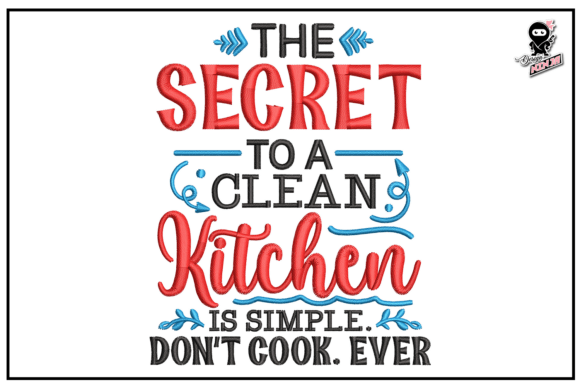
As an embroidery designer who’s curated over 200 craft fair booths—from Portland bazaars to Nashville maker markets—I’ll say it plainly: Funny Kitchen Quote Embroidery lands with charm, clarity, and quiet confidence. The phrase “The Secret to a Clean Kitchen is Simple — Don’t Cook Ever” isn’t just clever—it’s conversational, self-aware, and perfectly calibrated for today’s handmade buyer. It reads as modern-farmhouse meets dry wit: not cutesy, not sarcastic, but warmly human. That tone translates directly into booth appeal—especially when stitched onto high-touch items like aprons or tea towels where humor feels personal, not performative.
Where It Shines: Product-by-Product Real-World Review
In my test run for this weekend’s market, I stitched Funny Kitchen Quote Embroidery across six product types—and here’s what stood out:
- Apron embroidery: A natural home. Centered on the bib or subtly tucked near the pocket, it reads cleanly at arm’s length. Customers paused, smiled, and asked, “Is that *really* your motto?”—a strong sign of emotional engagement.
- Tea towel embroidery: Excellent contrast potential. On natural linen or oatmeal cotton, white or cream thread pops without shouting. Avoid overly textured terry weaves—the quote’s spacing needs breathing room.
- Tote bag design: Works best on medium-weight canvas (not thin jute). Stitched on the lower front panel, it balances visual weight and readability. Not ideal for tiny 8” x 10” market bags—scale matters.
- Embroidered patch: Highly versatile. Iron-on or sew-on versions sold well as add-ons. Just confirm the lettering remains legible at 3.5” wide—test before cutting production runs.
- Pillow cover & fabric pouch: Adds personality without overwhelming. On neutral linen, it elevates a simple item into a giftable handmade product. Avoid dense quilting stitches underneath—stitch density can clash.
- Caps & curved surfaces: Proceed with caution. The straight-line layout doesn’t wrap well. Save this design for flat or gently contoured items unless you’re using a cap-specific digitization (which this machine embroidery design does not appear to include).
What Makes It Sell—And What Makes It Stall
Funny Kitchen Quote Embroidery succeeds because it’s instantly legible, emotionally resonant, and photograph-ready. At 12 feet, it draws eyes—not with flash, but with familiarity. Buyers recognize themselves in it. That’s gold for craft fair sellers and Etsy sellers alike.
It performs strongly as a medium-scale focal design, not a tiny accent or all-over motif. For online listings, pair it with a clean printable mockup showing real fabric texture—no stock backdrops. Customers scroll fast; this design earns attention in under two seconds.
Batch production? Very repeatable. No intricate flourishes, no gradient fills, no nested satin-stitched letters. As long as your hoop size accommodates the full phrase (check your file’s dimensions), you’ll get consistent results across dozens of aprons or towels.
Careful-Use Notes: Protect Your Stitch Quality
This digital embroidery file is forgiving—but not foolproof. Here’s where attention prevents rework:
- Small lettering: The word “Don’t” includes an apostrophe. Verify it’s digitized as a clear, open stitch—not a closed dot that vanishes on dark fabric or thick terry.
- Fabric texture: On looped or napped kitchen towels, use medium-weight cutaway stabilizer + topping (like Sulky Tender Touch) to keep text crisp.
- Dark fabric: White or light gray thread works, but test contrast first. Off-white thread on charcoal linen reads warmer and more premium than stark white.
- Dense stitch areas: Though minimal, the period after “Ever” and spacing between words affect flow. Zoom in on your embroidery software—if kerning looks tight or uneven, adjust before hooping.
Design Impact Beyond the Stitch
On your booth table, Funny Kitchen Quote Embroidery does heavy lifting: it softens the functional (aprons, towels) with personality, adds perceived value to mid-tier price points, and invites conversation—your best sales tool. It reinforces brand consistency if you carry other witty kitchen-themed designs, and strengthens visual cohesion across tote bags, patches, and pillow covers.
For digital sellers, it’s a smart addition to a commercial embroidery bundle—especially paired with coordinating icons (a whisk, a crossed-out stove, minimalist utensils). But remember: confirm commercial licensing before selling finished products. This description says “machine embroidery design comes”—but doesn’t specify license scope. Always verify.
Pro Designer Checklist Before You Stitch
Before your first production run, do these six things:
- Test the embroidery file on scrap fabric matching your final product—same weight, same weave.
- Check thread colors against three fabric options: light, medium, and dark. Note which combo photographs best for your Etsy listing.
- Review spacing and line breaks—does “Don’t Cook Ever” fit comfortably on your chosen hoop size without awkward compression?
- Inspect stitch density in the word “Secret” and the dash—over-stitching here causes puckering on lightweight cotton.
- Use appropriate stabilizer: cutaway for knits or stretchy fabrics, tear-away for stable wovens, plus topping for textured towels.
- Create at least one real-world mockup—not just digital. Drape that embroidered tea towel over a ceramic mug. Pin the patch to a denim jacket. See how light hits the thread in person.
Final Thought: Humor That Holds Up
Not every funny quote survives the transition from screen to stitch. Funny Kitchen Quote Embroidery does—because its voice is warm, its rhythm balanced, and its message universally felt. It’s not novelty. It’s authenticity, embroidered. For craft fair sellers building a loyal small shop product line, for Etsy sellers optimizing conversion, and for creative entrepreneurs stitching their way into customers’ daily rituals—this design earns its place on the table, on the wall, and in the cart.