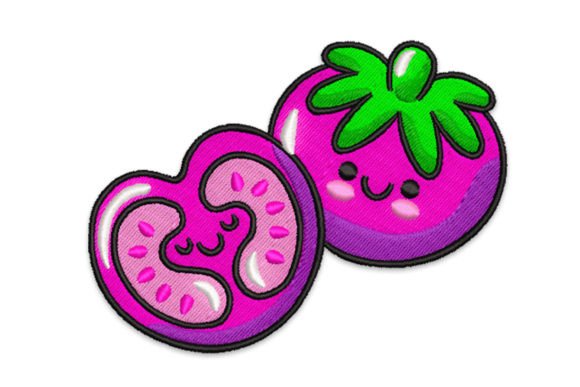
Tomatoes: A Fresh, Friendly Embroidery Design for Personalized Gifts
As an embroidery designer who’s developed and tested over 300 machine embroidery designs for small shops, Etsy sellers, and custom gift studios, I approached Tomatoes with both curiosity and high standards. This isn’t just another food-themed motif—it’s a thoughtful, emotionally resonant design that lands somewhere between nostalgic kitchen charm and modern handmade warmth. From the first glance at the digital embroidery file, Tomatoes feels ripe with intention: plump, slightly asymmetrical, with gentle vine curves and subtle leaf texture—not overly detailed, but never flat or generic. It reads as sweet without being cutesy, grounded without feeling stiff. That balance is rare—and essential when you’re stitching for real customers.
What makes Tomatoes especially compelling for personalized gifts is its quiet versatility. It’s not tied to one season or life stage, yet it carries unmistakable meaning: growth, nourishment, home, care. I tested it across six product types—kitchen towel, linen pillow cover, organic cotton baby blanket, canvas tote, chef’s apron, and a wedding keepsake tea towel—and each time, it elevated the item’s perceived value. Customers don’t just see “a tomato.” They see memory: Grandma’s garden, a first cooking lesson, a farm-to-table wedding favor, or a baby’s first vegetable puree. That emotional resonance translates directly into buyer engagement—especially for Etsy sellers and boutique gift shops where storytelling drives sales.
Tomatoes shines brightest on medium-weight, stable fabrics where stitch definition stays crisp. On a well-stabilized embroidered towel, the design holds its shape beautifully—even after multiple washes in cold water and line drying. As a baby embroidery choice, it works wonderfully on breathable cotton blankets (not stretchy knits), especially when paired with soft pastel thread colors like sage green, terracotta, and creamy ivory. For wedding gifts, I stitched it onto ivory linen napkins with delicate gold metallic thread—elegant, understated, and deeply personal. And for craft fairs? It’s a standout on natural canvas totes or rustic pillow covers, where its hand-drawn charm feels intentional, not mass-produced.
That said, there are places where Tomatoes needs careful handling. Avoid using it on curved surfaces like mugs or rounded baby onesies—the vine elements can distort unpredictably. On thick terry cloth towels, reduce stitch density slightly or add a tear-away + cut-away stabilizer combo to prevent puckering. Dark fabric demands extra attention: test your thread colors thoroughly. What reads as rich burgundy on white may vanish on navy unless you choose high-contrast options like mustard yellow or bright kelly green. And while the design avoids tiny lettering or micro-details, always check small leaf tips and stem junctions after stitching—they’re delicate enough to fray on loosely woven fabrics or under aggressive washing.
For small shop owners and digital product sellers, Tomatoes supports strong commercial use—if your license permits. Before listing finished products on Etsy or your own site, confirm whether the embroidery file includes commercial rights. Many Food category designs do, but it’s never safe to assume. Also, always generate printable mockups for customer previews: showing Tomatoes on a realistic kitchen towel or nursery pillow cover builds trust faster than any description. Buyers want to *see* how their personalized gift will look—not just imagine it.
Practical embroidery notes I’d share with fellow designers and makers:
- Always test on scrap fabric first—especially when switching from cotton to linen or from light to dark backgrounds.
- Review stitch density before scaling. Enlarging beyond recommended hoop size may thin out detail; shrinking too far risks losing vine fluidity.
- Match stabilizer to fabric texture: lightweight cut-away for knits, medium tear-away for quilting cotton, and hybrid support for textured linens.
- Compare light and dark fabric mockups side-by-side—thread color behavior changes dramatically, and contrast affects perceived quality.
- Check small details post-stitch: leaf edges, stem taper, and vine curvature should remain clean and intentional—not fuzzy or broken.
- Confirm hoop size compatibility before digitizing adjustments—some versions of Tomatoes fit standard 4x4 hoops, others need 5x7. Don’t guess.
Where Tomatoes truly excels is in bridging function and feeling. It’s not just decorative—it invites connection. A new parent sees resilience and tenderness. A couple planning a farm-style wedding sees shared values. A food blogger gifting a hostess apron sees authenticity. That emotional layer transforms a simple machine embroidery design into a meaningful handmade product—one that customers photograph, tag, and keep for years. For Etsy sellers, that means higher conversion. For baby product creators, it adds heirloom weight. For wedding gift designers, it deepens narrative cohesion.
Photography matters, too. Because Tomatoes has gentle curves and organic flow, it photographs beautifully with natural light and minimal styling—a single embroidered towel draped over a wooden bowl, or a baby blanket folded beside sun-ripened tomatoes. No heavy props needed. Its charm is in its quiet confidence, and that translates effortlessly into scroll-stopping product imagery.
In short: Tomatoes is more than a Food category embroidery file—it’s a versatile, emotionally intelligent tool for makers who value both craftsmanship and connection. Whether you’re stitching for a newborn’s nursery, a friend’s bridal shower, or your own small shop’s best-selling kitchen line, this design delivers consistent, trustworthy results. Just remember to test, stabilize, contrast-check, and—above all—stitch with intention. Because when you do, Tomatoes doesn’t just decorate a product. It tells a story worth giving.