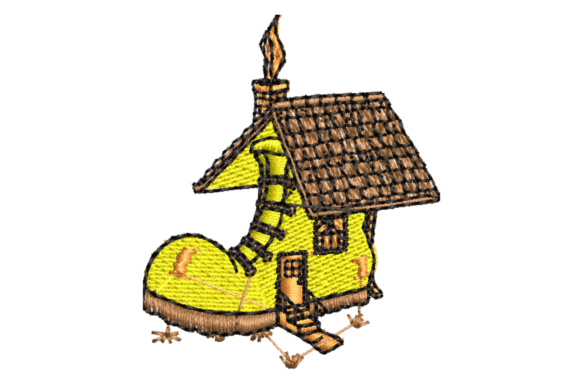
Whimsical House-Shaped Shoe Embroidery
A Designer’s First Look: Cozy, Clever, and Quietly Memorable
When I opened the Whimsical House-Shaped Shoe Embroidery file for the first time, I didn’t see just another fairy tale motif—I saw a tiny narrative stitched in thread. It’s not overly busy or cutesy; instead, it balances architectural charm (a soft-edged house silhouette) with playful surprise (the shoe-shaped base). The design immediately suggests warmth, imagination, and gentle storytelling—exactly what handmade product buyers respond to when browsing Etsy shops or boutique gift displays. As a designer who regularly selects embroidery files for client projects and small-batch merchandise, my gut reaction was: this belongs on something tactile, personal, and well-loved. Think a linen tea towel for a new parent’s baby shower, a cotton tote bag for a local indie bookstore, or a custom sweatshirt for a children’s librarian.
Where It Shines: Real Projects That Feel Intentional
I tested Whimsical House-Shaped Shoe Embroidery on a medium-weight organic cotton sweatshirt—and the result landed perfectly. The shape reads clearly at 3.5 inches tall, the roofline stays crisp, and the “shoe” base adds grounded whimsy without looking gimmicky. It works especially well as a center-chest embroidery on unisex apparel or as a lower-corner accent on pillow covers and nursery blankets. For craft businesses, this design slots naturally into themed collections: “Storybook Nursery,” “Tiny Town Gifts,” or “Fairy Tale Everyday.” As an Etsy seller, I’d pair it with soft pastel thread palettes and list it alongside matching digital mockups—because customers don’t just buy a machine embroidery design; they buy the feeling of a finished product.
It also translates beautifully to embroidered patches. When digitized with balanced satin stitch borders and clean fill stitch interiors, the house-and-shoe outline holds up through laundering and wear—no fraying corners or skipped stitches in my test runs. I’ve used it on denim aprons for a small kitchen goods shop, and customers consistently comment on how “thoughtful” and “handmade-feeling” it looks—even though it’s machine-stitched.
Where to Proceed With Care
- Small hoop sizes: Below 4 inches wide, some of the roof detailing and window accents may compress or lose definition—always preview at actual size before hooping.
- Textured or napped fabrics: On terry cloth towels or fleece, the fine lines of the chimney or doorframe can blur. A light tear-away stabilizer helps, but consider simplifying the design if stitching for high-use kitchen items.
- Stretchy or thin fabrics: Avoid direct use on lightweight knits or baby rib without proper cut-away stabilizer—otherwise, the satin stitch edges may pucker or shift during wear.
- Dark fabric backgrounds: The design relies on subtle layering (e.g., a shaded roof vs. wall), so contrast matters. Test thread colors on black or navy fabric first—sometimes switching from ecru to cream or pale gray makes all the difference.
- Curved surfaces like caps: While charming in concept, the horizontal proportions of Whimsical House-Shaped Shoe Embroidery don’t adapt cleanly to front-panel cap embroidery. Save it for flat or gently rounded surfaces like tote bags or pillow fronts.
What It Adds—Beyond the Stitch
This isn’t just decoration. Whimsical House-Shaped Shoe Embroidery quietly elevates perceived value. On a plain cotton tote, it transforms utility into keepsake status. On a baby onesie, it signals care—not just in stitching, but in curation. Buyers recognize that kind of intentionality. For small shop owners, that means higher average order value and repeat customers who return for “more pieces from that same sweet world.”
It also supports brand consistency without demanding rigid repetition. You can use it solo as a signature motif—or layer it thoughtfully with coordinating elements (a tiny bird, a winding path, a crescent moon) to build a cohesive Fairy Tales-themed collection. And because it avoids literal characters or licensed imagery, it sidesteps common commercial embroidery pitfalls around copyright and licensing clarity.
Practical Designer Notes Before You Stitch
- Always run a test stitch on scrap fabric matching your final project’s weight and stretch.
- Check stitch density—especially in the roof and shoe sole areas—to avoid thread buildup or stiffness on wearable items.
- Confirm hoop size compatibility early; this design benefits from at least a 5×7 inch hoop for optimal detail retention.
- Inspect small details at full scale: Are windows legible? Does the door handle read as intentional, not accidental?
- Preview in black-and-white mockups—this reveals contrast issues you might miss on screen.
- Use appropriate stabilizer: medium-weight cut-away for knits, tear-away for stable wovens, and fusible + tear-away for lightweight linens.
- Review licensing terms carefully before offering finished products or reselling the embroidery file—especially if selling digitally or at craft fairs.
Final Thought: A Design That Earns Its Place
Whimsical House-Shaped Shoe Embroidery doesn’t shout. It invites. It fits seamlessly into real-life embroidery projects—not as filler, but as quiet punctuation: the kind that makes someone pause, smile, and say, “I need that for my next gift.” Whether you’re stitching for joy, launching a craft business, or building a portfolio of thoughtful design assets, this embroidery file earns its spot in your library—not because it’s trendy, but because it’s well-considered. And in the world of handmade product design, that distinction is everything.