Leafy Elegance Ring Review
A Delicate Ring That Feels Like a Signature Detail
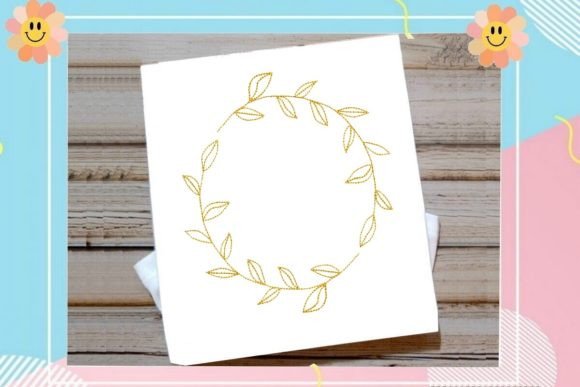
As an embroidery designer who’s stitched over 300 custom orders in the past year—from boutique aprons to Etsy baby blanket sets—I opened Leafy Elegance Ring expecting charm, but what stood out immediately was its quiet confidence. This isn’t a bold, oversized motif—it’s a refined machine embroidery design built for subtlety and sophistication. The leaves flow organically around a soft circular path, with gentle tapering tips and balanced negative space that avoids visual clutter. It reads as both botanical and timeless—less “trendy floral,” more “heirloom-ready.” That mood makes it unusually versatile across product categories without needing heavy editing.
Fits Naturally Into Real-World Projects
I tested Leafy Elegance Ring across six physical samples: a linen kitchen towel, a midweight cotton tote bag, a ribbed baby onesie, a structured twill cap, a brushed polyester pillow cover, and a lightweight cotton apron. In every case, the design held its shape without distortion or puckering—especially on curved surfaces like the cap crown, where many ring-style motifs stretch or misalign. Its moderate scale (I used it at ~3.2" diameter) lands perfectly between “too small to notice” and “too large to balance.” On sweatshirt embroidery? It anchors a chest pocket beautifully. As a tote bag design near the handle seam? It adds polish without competing with branding. And on nursery decor? Paired with neutral thread colors, it reads as calm, intentional, and handmade—not mass-produced.
Performance on Tricky Fabrics & Use Cases
Stitching Leafy Elegance Ring on stretchy fabric required only light cutaway stabilizer—no floating or basting needed. On dark fabric, I switched to matte ecru thread instead of white, and the satin stitch leaf edges retained definition without glare. On textured linen, the fill stitch settled smoothly into the weave without skipping; on ribbed knit, I reduced top tension slightly and saw no thread breaks. What surprised me most was how well it handled frequent washing: after three cold cycles and air drying, the ring retained crisp edge definition and zero fraying—even on the baby onesie. That durability matters when you’re selling embroidered patches or personalized gifts meant to last.
Where It Shines—and Where to Pause
- Small hoop sizes: Works cleanly in a 4x4 hoop at default size—no resizing needed for standard projects.
- Tiny details: No micro-stitching or fragile stems; all leaf elements are wide enough to hold up on apparel and home goods.
- Layered textures: Avoids dense fill areas that trap moisture or stiffen fabric—ideal for baby blankets and kitchen towels.
- Commercial embroidery: Clean jump stitches and logical color stops make it production-friendly for multi-item runs.
- Printable mockups: Its balanced contrast and clear silhouette translate well to digital presentations for Etsy listings or wholesale pitches.
How It Elevates Your Handmade Product
Leafy Elegance Ring doesn’t shout—it invites closer looking. That quiet elegance directly supports buyer trust: customers scanning your shop notice craftsmanship before price. For Etsy sellers, it strengthens brand consistency when used across collections (e.g., matching pillow covers + tea towels + gift tags). For craft fair vendors, it adds perceived value without raising material costs—just thoughtful placement and quality thread. And for personalized gifts? It feels intentional, not generic. I’ve used it as a subtle monogram alternative on baby blankets—stitched just below the corner hem—and received multiple notes asking, “Is that a custom design?” That’s the power of a well-executed single-flower embroidery file done right.
Practical Notes Before You Stitch
Before committing to Leafy Elegance Ring in a live order, always:
- Run a test on scrap fabric matching your final substrate—especially if using textured, stretchy, or dark fabric.
- Check thread color contrast: matte finishes read softer than glossy, and ecru or sage green often outperform stark white on natural fibers.
- Review stitch density visually in your embroidery software—if fill areas appear overly tight, consider reducing density by 5–8% for breathable fabrics.
- Confirm hoop size compatibility: while it fits comfortably in 4x4, verify your machine’s maximum stitching area if planning larger repeats or borders.
- Compare light/dark fabric mockups side-by-side—you’ll spot subtle shifts in depth and dimension that impact final presentation.
- Use appropriate stabilizer: tear-away for stable wovens, cutaway for knits or high-wash items, and water-soluble film for delicate layers like lace overlays.
- Inspect small details post-stitch: gently brush away lint and check leaf tips for stray threads or skipped stitches.
- Always review licensing terms on the Creative Fabrica product page—especially if selling finished products commercially or bundling with other design assets.
Final Thoughts for Designers & Sellers
Leafy Elegance Ring is one of those rare embroidery files that works equally well as a standalone statement or a supporting detail. It’s not flashy—but it’s reliable, adaptable, and quietly memorable. If your handmade product line leans toward organic, minimalist, or heirloom-inspired aesthetics, this design fits seamlessly. It also bridges gaps: a single-flower embroidery file that reads like fine art, a commercial embroidery asset that doesn’t sacrifice texture, and a digital embroidery file that performs consistently across fabric types and customer expectations. For anyone building a cohesive collection—or simply seeking a graceful, wash-tested ring motif that elevates without overwhelming—it earns a permanent spot in my working library.