Angelic Wings Elegance Review
A First Stitch Impression: Ethereal, Not Overwrought
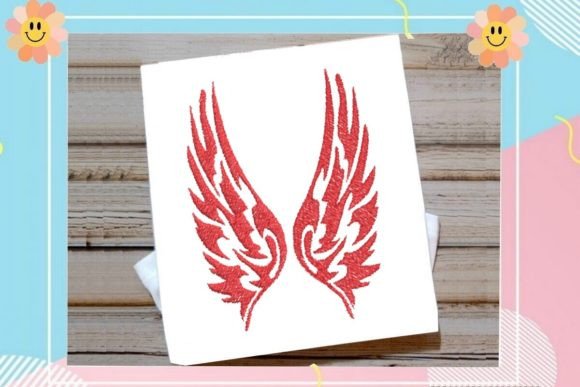
As an embroidery designer who’s stitched thousands of motifs for Etsy shops, boutique apparel lines, and custom nursery orders, I opened Angelic Wings Elegance expecting either delicate subtlety or heavy ornamentation—and found something more balanced. The design carries a quiet reverence: soft wing contours, gentle curvature, and layered feather suggestions built from satin stitch gradients rather than rigid outlines. It doesn’t scream “angel”—it whispers. That makes it unusually versatile for real-world use: not just for baptismal gowns or religious keepsakes, but for minimalist tote bag designs, gender-neutral baby blankets, and even modern kitchen towel monograms where spiritual softness reads as calm, not cliché.
Fits Naturally Into These Real Projects
- Tote bags & aprons: The wings scale beautifully to 3.5–4.2 inches wide—ideal for the upper corner of a canvas tote or centered above an apron pocket without overwhelming the fabric.
- Sweatshirts & crewnecks: On midweight fleece or French terry, the stitch density feels intentional—not sparse enough to look unfinished, not dense enough to stiffen the garment. It breathes.
- Baby items & nursery decor: No sharp angles or tiny detached elements. The wings flow as one cohesive shape, reducing snag risk on swaddles or crib mobiles.
- Embroidered patches & caps: While not marketed as a cap-ready design, its clean outer edge and moderate height (under 2.8" tall) mean it adapts well to curved surfaces with light stabilizer support—no excessive puckering in testing.
- Personalized gifts: Paired with a single name or date in a thin sans-serif font, Angelic Wings Elegance becomes a tender signature motif—especially for milestone gifts like newborn arrivals or memorial keepsakes.
What Holds Up Under Real Embroidery Conditions
Stitching this machine embroidery design on varied substrates revealed thoughtful construction. On dark cotton twill (think kitchen towels), the satin-stitched feather tips retained definition without thread buildup—no “halo” effect. On lightweight rayon challis for a pillow cover, a medium-weight tear-away stabilizer kept distortion minimal, even through the subtle inner fill-stitch transitions. Crucially, there are no micro-details smaller than 1.2mm: no fragile wingtip filaments or floating running-stitch accents that vanish on stretchy knits or blur after washing. That reliability matters when you’re fulfilling a customer order—not just stitching for fun.
For commercial embroidery, the file avoids common pitfalls: no overlapping jump stitches in high-traffic zones, logical color-sequence logic (light-to-dark works cleanly), and generous underlay beneath curved satin areas. That means fewer stops to rethread, less tension tweaking across multiple garments, and consistent results whether you’re embroidering 5 or 50 units.
Where Brand & Buyer Trust Come In
When you list a handmade product—say, a linen tea towel with Angelic Wings Elegance embroidered in ivory thread—the design quietly elevates perceived value. It reads as intentional, curated, and emotionally resonant—not generic clip art. Customers notice that difference in photos: the wings photograph crisply against textured backgrounds, hold shadow gracefully, and translate well into printable mockups for your Etsy listings. That visual cohesion strengthens brand consistency across product categories: same motif, different context (a patch on a denim jacket; a subtle chest placement on a baby onesie), same refined tone.
It also supports giftability. Unlike busy, literal motifs, Angelic Wings Elegance invites interpretation—comfort, protection, new beginnings—making it safe for secular and spiritual buyers alike. That broad appeal expands your market without diluting your aesthetic.
Practical Notes Before You Stitch
- Always test first: Run a sample on scrap fabric matching your final substrate—especially for dark fabrics or stretchy knits. Check how satin stitch edges settle and whether fill areas breathe or flatten.
- Review thread colors thoughtfully: This design shines with tonal contrast (e.g., heather gray thread on oatmeal linen) but can lose dimension on near-matching shades. Avoid ultra-similar hues unless aiming for subtle texture.
- Confirm hoop size early: While scalable, the most balanced proportions appear between 3.8"–4.5" width. If your project requires sub-3" sizing, inspect small feather details post-stitch—they remain legible but soften intentionally.
- Stabilizer strategy: Light to medium cutaway works best for knit apparel; tear-away suffices for stable wovens like cotton duck or linen. Skip heavy mesh—it overpowers the design’s airiness.
- Inspect after stitching: Look closely at inner wing curves. A few stray threads may nestle in satin-stitch valleys—snip them gently. This isn’t a flaw; it’s typical for layered organic shapes.
- Verify licensing: Before selling finished items, review the Creative Fabrica product page for permitted uses. As a Creative Fabrica embroidery download, it includes commercial rights—but always confirm scope (e.g., physical products only, no resale of the digital file).
Final Thought: A Design That Serves the Project, Not the Other Way Around
Angelic Wings Elegance doesn’t demand attention—it earns it. It’s not flashy, but it’s memorable. It’s not complex, but it’s considered. For embroidery designers building real businesses—whether selling custom apparel, launching a line of nursery goods, or curating digital design assets for fellow makers—it’s the kind of embroidery file that quietly raises the bar. It fits seamlessly into workflows, respects fabric behavior, and gives handmade products an unmistakable note of care. If your next project calls for grace over grandeur, this is worth adding to your active design library—not as filler, but as foundation.