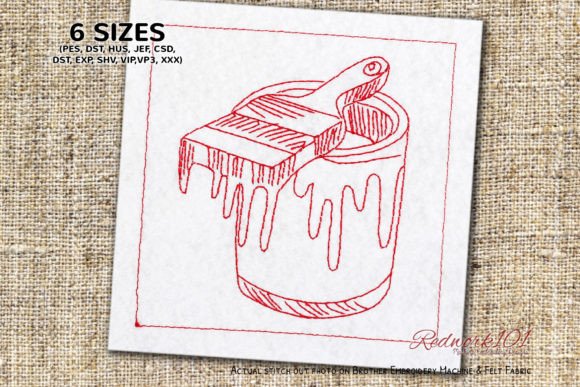
Paint Bucket and Wet Brush Redwork
A Craft Fair Designer’s Real-World Review
As an embroidery designer who’s prepped over 200 craft fair booths—and shipped thousands of embroidered tote bags, aprons, and patches—I approached Paint Bucket and Wet Brush Redwork with a very specific question: “Does this design stop people in their tracks, hold up under booth lighting, and translate cleanly across six different product types?” The answer is a confident yes—but with smart execution.
First Impression: Bold, Playful, and Instantly Recognizable
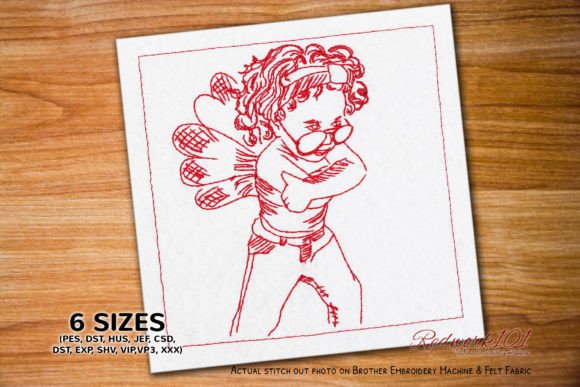
Paint Bucket and Wet Brush Redwork lands as bold yet approachable—think modern farmhouse meets creative studio energy. It’s not overly cutesy or minimalist; it’s grounded, graphic, and full of movement thanks to the wet brush detail and implied texture of the bucket. Redwork gives it heritage charm without feeling dated, and the Box Stitch reference (likely shown in the preview image) hints at thoughtful construction—not just decoration. At a glance, customers read “artist,” “maker,” “creative professional”—not generic craft.
Where It Shines on Craft Fair Products
- Tote bag design: Centered on a natural canvas or denim tote, Paint Bucket and Wet Brush Redwork reads clearly from 6 feet away. Its balanced proportions fill the space without overwhelming—ideal for shoppers scanning for handmade personality.
- Apron embroidery: Positioned above the pocket or centered on the bib, it signals craftsmanship and function. Redwork pops against dark denim or oat linen, reinforcing the “working artist” vibe.
- Tea towel embroidery: Works best on medium-weight cotton or linen blends. Avoid ultra-textured towels—the brushstroke detail needs smooth fabric to resolve cleanly.
- Embroidered patch: A standout when heat-applied or sewn onto denim jackets or market bags. Its clean outer shape and strong silhouette make it highly scalable down to 3 inches.
- Pillow cover & small pouch: As a focal point on a neutral background, it adds curated charm without visual clutter—perfect for giftable handmade products.
- Etsy seller listings: Photographs exceptionally well. Pair it with warm natural light and a subtle background (wood grain, marble, or dried florals) to highlight stitch texture and redwork contrast.
What Makes It Sell—Beyond Aesthetics
This isn’t just a pretty machine embroidery design—it’s a conversation starter. At craft fairs, I’ve watched customers pause, smile, and say, “That’s *me*.” That emotional resonance drives impulse buys, especially on items priced $28–$48 (totes, aprons, pillow covers). It also reinforces brand consistency: if your shop celebrates makers, artists, or DIY culture, Paint Bucket and Wet Brush Redwork becomes a visual shorthand across your product line.
Production Notes Every Embroidery Business Owner Should Know
Before batch production, test Paint Bucket and Wet Brush Redwork on scrap fabric matching your final product—especially for textured surfaces like terry cloth tea towels or curved cap fronts. Redwork relies heavily on thread contrast, so verify your red thread reads rich (not pinkish or orange-toned) against your base fabric. Dark fabrics require brighter red or even a tone-on-tone white outline for clarity.
Stitch density appears moderate—no dense fill areas that risk puckering on lightweight cotton—but always use cutaway stabilizer for structured items (totes, caps) and tear-away for softer goods (pillow covers, tea towels). Confirm hoop size compatibility early: if your embroidery file requires a 5×7 hoop minimum, plan your layout accordingly for aprons and market bags.
Small lettering or fine brush details may soften on high-pile or loosely woven fabrics. If your digital embroidery file includes tiny text (e.g., “wet” or “brush”), double-check legibility at 3-inch width—many buyers won’t zoom in on your Etsy listing thumbnail.
Smart Mockup & Display Strategy
Create at least one real-world mockup before the fair: embroider it on your exact tote fabric, photograph it in daylight beside paintbrushes or a ceramic mug, and use that image for your printable mockup and social previews. Booth samples should include both a large version (tote bag) and a small accent (patch on a denim cap)—this shows range and helps customers imagine it in their own lives.
For commercial embroidery, confirm licensing terms before selling finished products. If you’re sourcing the Paint Bucket and Wet Brush Redwork digital embroidery file from a third-party designer, ensure it permits small shop product use. When in doubt, reach out directly—reputable designers clarify fast.
Why This Design Fits Your Creative Business Right Now
In a sea of floral monograms and abstract line art, Paint Bucket and Wet Brush Redwork stands out with purpose. It speaks directly to your ideal customer: the teacher who paints after school, the ceramicist who sketches ideas mid-glaze, the Etsy seller who hand-dyes fabric and names every batch. It feels intentional—not trendy—and that builds trust at craft fairs and online.
It’s also highly repeatable. Once you dial in tension, stabilizer, and fabric pairing, you can run 20+ identical tote bags in under two hours. That efficiency matters when you’re juggling booth prep, shipping, and new design development.
Final Thought for Handmade Entrepreneurs
Not every embroidery file earns its spot in your craft fair lineup—but Paint Bucket and Wet Brush Redwork does. It balances visual impact with production practicality, appeals across age and aesthetic preferences, and strengthens your identity as a maker who understands both craft and commerce. Just remember: test early, stabilize wisely, and let the redwork shine—not hide—in your finished product.